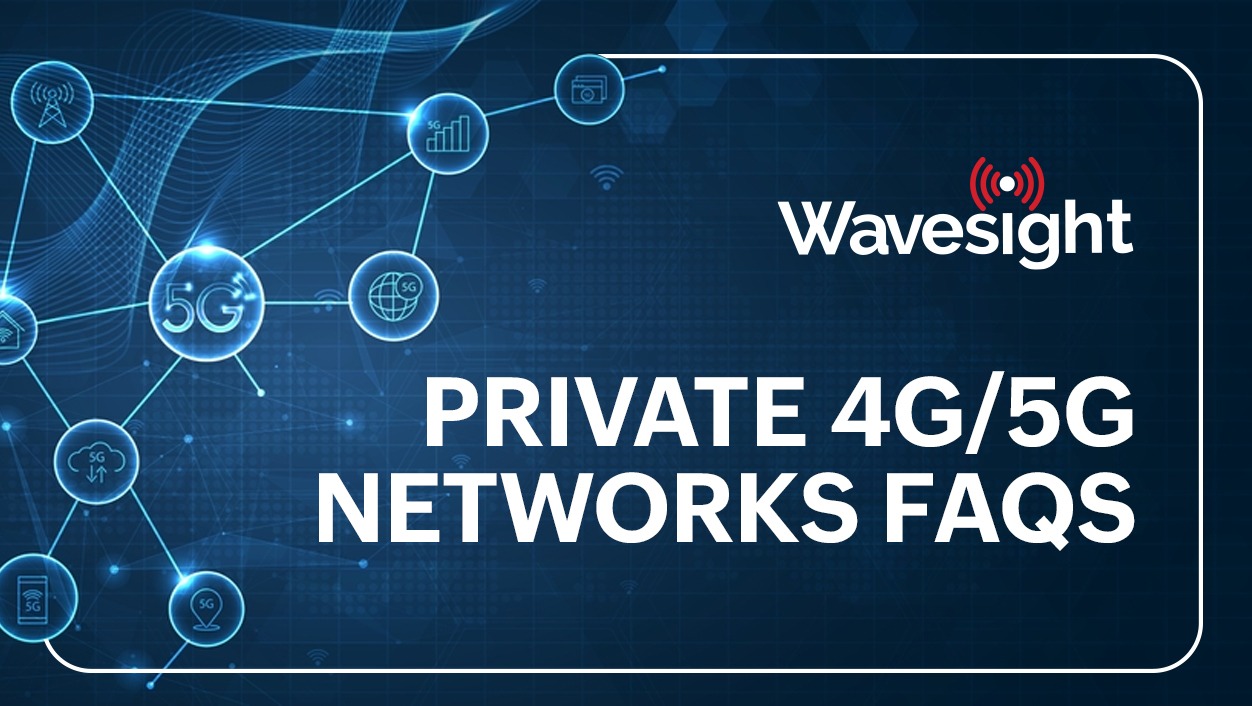
Private 4G/5G Networks Frequently asked Questions
Across industries such as manufacturing, logistics, energy and smart infrastructure, enterprise connectivity needs are evolving quickly. Over the past few years, while working with organizations exploring private 4G and 5G deployments, one pattern has become very clear.
Decision makers rarely begin with technical specifications. Instead, they start with practical questions. How does a private network actually work? Is it different from public 5G? What does deployment involve? And how should enterprises choose the right provider?
We hear these questions consistently when speaking with IT leaders, infrastructure architects and operations teams evaluating private wireless networks. Rather than addressing them individually in conversations, we thought it would be useful to bring those insights together in one place.
In this article, we answer some of the most common questions enterprises ask when exploring private 4G and 5G networks. If your organization is evaluating deployment options or needs guidance on architecture and implementation, our specialists are always available to help.
Let’s start with the most fundamental question.
1. What is a Private 4G or 5G Network?
A private 4G or 5G network is a dedicated cellular network deployed specifically for an enterprise environment such as a factory, port, warehouse, airport or industrial campus.
Unlike public cellular networks, which are shared by millions of users, a private network is built exclusively for the organization operating it. This allows enterprises to control how the network operates and how devices communicate within it.
These networks use the same core cellular technologies as telecom operators but are configured for enterprise workloads and operational systems.
Why are enterprises deploying private cellular networks?
Many organizations are adopting private networks because traditional connectivity solutions struggle in large operational environments.
Common drivers include:
- Reliable connectivity for industrial automation
- Support for large-scale IoT deployments
- Secure communication for operational technology systems
- Stable connectivity across large industrial facilities
Do enterprises always choose 5G over LTE?
Another important factor is infrastructure continuity. Most private LTE deployments are designed to be forward-compatible with 5G, meaning enterprises can upgrade to 5G later while reusing much of the same infrastructure such as fiber backhaul, site preparation and radio locations.
This allows organizations to start with LTE today and evolve their network as new use cases demand higher performance, reducing concerns about long-term technology obsolescence.
2. How is Private 5G Different from Public 5G?
Public 5G networks are designed to serve broad consumer and mobile connectivity needs across cities and regions. Telecom operators manage the infrastructure and allocate network resources among millions of users.
Private 5G networks operate differently because they are built exclusively for a single enterprise environment.
This gives organizations full control over network behavior and performance.
Explore more on this topic : Private 5G vs. Public Networks: The Enterprise Decision Framework
What advantages does a private network provide?
A dedicated enterprise network offers several important benefits:
- Dedicated bandwidth for operational applications
- Controlled device access and authentication
- Predictable latency and performance
- Greater visibility into network traffic
For industrial operations, this level of control is often essential.
Can enterprises keep data inside their own network?
Yes. In many private deployments, the 5G core network and edge infrastructure operate locally, allowing sensitive operational data to remain within the enterprise environment rather than traveling through public telecom infrastructure.
3. How Does a Private 5G Network Actually Work?
To understand how private cellular networks operate, it helps to look at the basic architecture.
A typical deployment includes three main components working together.
- Radio Access Network (RAN)
Base stations installed across the facility provide wireless coverage for connected devices. - 5G Core Network
The core manages device authentication, traffic routing and network policies. - Edge or Local Data Infrastructure
This layer processes data close to the devices generating it, reducing latency for real-time applications.
Together, these components create a self-contained cellular environment designed specifically for enterprise operations.
Why is edge computing often integrated with private 5G?
Many industrial applications require near-instant data processing.
Edge computing enables this by processing data locally rather than sending everything to distant cloud platforms.
Typical use cases include:
- Machine vision systems
- Autonomous vehicles
- Real-time monitoring and predictive maintenance
4. What Problems Does Private 5G Solve That Wi-Fi Cannot?
Wi-Fi remains widely used in enterprise environments, but it was originally designed for office connectivity rather than large-scale industrial operations.
In complex environments such as ports, factories and logistics hubs, Wi-Fi networks often face limitations.
Private cellular networks address several of these challenges.
Key advantages over Wi-Fi include:
- Better mobility support for moving equipment
- Higher device density for IoT deployments
- Wider and more predictable coverage
- Stronger network security frameworks
For organizations running automated equipment or connected industrial systems, these advantages can significantly improve operational reliability.
5. Can Private 5G Support Large-Scale IoT Deployments?
Yes. Supporting large IoT ecosystems is one of the primary reasons enterprises adopt private cellular networks.
Industrial facilities increasingly rely on connected sensors and devices to monitor operations, track assets and collect real-time performance data.
Private 5G networks are designed to support thousands of simultaneously connected devices while maintaining stable performance.
What types of devices typically connect to private networks?
Examples include:
- Industrial sensors
- Autonomous mobile robots
- Asset tracking systems
- Environmental monitoring devices
- Connected safety systems
This ability to scale device connectivity is a key factor in modern digital infrastructure strategies.
6. Do Enterprises Need Dedicated Spectrum for Private Networks?
Spectrum access is an important consideration when deploying private cellular infrastructure.
Enterprises can operate private networks using several spectrum models depending on regional regulations.
Common spectrum options include:
- Licensed spectrum provided by telecom operators
- Shared spectrum frameworks approved by regulators
- Dedicated enterprise spectrum allocations
Each option has implications for deployment cost, performance guarantees and regulatory requirements.
Choosing the right spectrum strategy is typically part of the network design process.
7. What Industries Are Deploying Private 5G the Fastest?
Private cellular networks are gaining traction across several industries where connectivity directly impacts operational performance.
Some sectors adopting the technology most aggressively include:
- Manufacturing and Industry 4.0 environments
- Ports and logistics hubs
- Mining and energy operations
- Airports and transportation infrastructure
- Smart campuses and large enterprise facilities
These environments often involve large physical areas, moving equipment and high device density, making them ideal candidates for private wireless infrastructure.
8. What is the Difference Between Private, Public and Hybrid Networks?
Enterprises do not always rely on a single connectivity model. Many organizations combine multiple network types depending on operational needs.
Public networks
Provide wide-area connectivity managed by telecom operators.
Private networks
Provide dedicated connectivity within a controlled enterprise environment.
Hybrid networks
Combine both models.
For example, a logistics company may operate a private network inside a warehouse while using public networks for fleet connectivity outside the facility.
This hybrid approach allows organizations to balance coverage, control and cost.
9. How Much Does a Private 5G Network Cost?
The cost of deploying a private network varies depending on several factors.
These include:
- Facility size and coverage requirements
- Number of connected devices
- Spectrum licensing model
- Infrastructure and edge computing requirements
Large industrial sites may require multiple radio units and edge platforms to ensure reliable connectivity across the entire facility.
While deployment costs can initially appear significant, many enterprises view private wireless infrastructure as a long-term investment supporting automation, IoT expansion and digital transformation initiatives.
Key consideration for enterprise decision makers:
The ROI of private 5G is rarely about reducing connectivity costs. Its real value comes from enabling automation, reducing operational downtime and supporting applications that traditional wireless infrastructure cannot reliably handle.
10. How Should Enterprises Choose a Private 5G Provider?
Selecting the right technology partner (Private 5g service provider) is a critical step in any private network project.
Enterprises should evaluate providers based on both technical expertise and deployment experience.
Important factors to consider include:
- Experience with enterprise and industrial deployments
- Ability to design end-to-end network architecture
- Integration with existing IT and operational systems
- Ongoing network monitoring and management services
Private networks are not simply installed and left running. They require continuous optimization to maintain performance and security.
Working with experienced specialists helps ensure that the network architecture supports both current operational needs and future expansion.
Moving Forward with Private Wireless Infrastructure
Private 4G and 5G networks are quickly becoming foundational infrastructure for organizations building connected operations and data-driven environments.
Understanding how these networks work and how they fit into broader enterprise connectivity strategies helps organizations make more confident deployment decisions.
If your team is exploring private wireless infrastructure or evaluating deployment options, connecting with experts can help clarify architecture choices, spectrum strategies and implementation pathways.
Reach out to our specialists to discuss your requirements and explore how private 4G or 5G networks can support your organization’s next phase of digital innovation.